Diamond vs. Moissanite vs. Cubic Zirconia: What's the Difference?
Diamonds are the perfect choice for engagement rings and, let's be honest, they look perfect in any other piece of jewelry too. But other stones have become very popular in recent years, especially moissanite and cubic zirconia. Are they really that similar to diamonds?
Both diamond and moissanite have excellent sparkle, but cubic zirconia is still an excellent substitute for anyone looking for a diamond-like look. So what is the difference between diamond, moissanite and cubic zirconia? In this guide, we compare the characteristics of diamonds, moissanite and cubic zirconia to help you make the best decision when choosing the perfect stone for your jewelry.
What is a diamond?

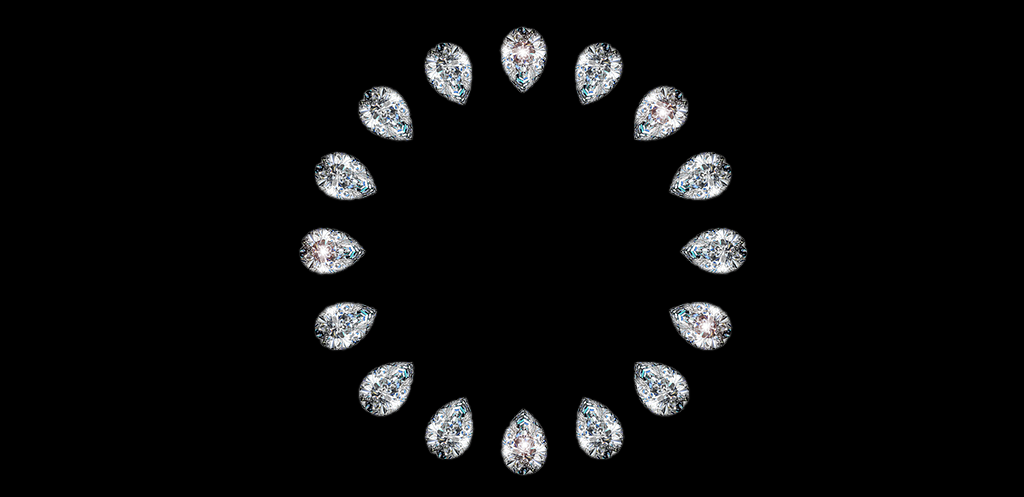
Diamonds are precious stones made of pure carbon. It is the most popular stone for jewelry because it is the hardest natural mineral in the world. When well cut, diamonds have a unique brilliance, which makes them the most popular stones in the world of jewelry.
See: Loft Masculino Diamond Ring Collection
To buy a quality diamond, you should always consider the 4 C's:
Cut
Color
Clarity
Carat (weight)
A diamond's cut determines its brilliance, while color and clarity affect its overall appearance. A diamond's weight, measured in carats, influences its value.
What is cubic zirconia?
Cubic zirconia is an artificial stone frequently used as an alternative to diamond. This lab-made stone is cut in the same way as a diamond, which gives it a similar look. Cubic zirconia is much cheaper than diamond and comes in a huge range of colors, from white to yellow to pink.
When buying cubic zirconia, check its quality grade and give preference to AAA-grade stones, as they are more durable. However, because it is a synthetic and more fragile stone, it does not have the same durability as diamond.
What is moissanite?
Moissanite is a synthetic (lab-made) stone composed of silicon carbide. Moissanite comes in a wide variety of colors, from white to yellow to pink.
It became famous online for "testing positive" on diamond testers, which can fool a lot of people, but this only happens with basic thermal conductivity tests, and it can easily be distinguished from a natural diamond.
Manufactured mainly in China, moissanite is often presented as a hard stone, but in technical tests it has proven to be fragile and can easily break on impact. Moissanite reflects light well, but its sparkle is different from that of a natural diamond: it has a sparkle with more colorful flashes.
Today, it is being replaced in the jewelry industry by lab-grown diamonds, which are a more sustainable alternative and closer to natural diamonds.
Comparing diamond, moissanite and cubic zirconia

1. Durability and hardness
Natural diamond is the hardest stone on the planet. In terms of durability and hardness, it outperforms all its competitors, offering extreme resistance.
2. Color and transparency
Diamonds come in a wide variety of colors, ranging from colorless to yellow and pink. Moissanite and cubic zirconia can also be found in a wide range of colors, with properties equivalent to those of a high-quality diamond.
3. Clarity
When it comes to clarity, diamonds are graded on a scale from flawless to included (when there are inclusions inside the stone). Moissanite and cubic zirconia are not graded the same way because, being lab-made, they are flawless in terms of clarity, with no inclusions.
4. Cost
In terms of cost, diamond is considered the most expensive gemstone, followed by moissanite and cubic zirconia. Depending on the quality of the stone, a 1-carat diamond can cost from $1,000 to $10,000. Moissanite is much cheaper, with a 1-carat stone costing around $40 to $100. The cheapest option is cubic zirconia, with a 1-carat stone costing about $20 on average.
Pros and cons of each gem
When choosing the stones for your jewelry, it is important to consider the strengths and weaknesses of each one.
Diamond is the most durable and brilliant of the three stones, but also the most expensive. In addition, because it is natural and precious, it appreciates over time and becomes a form of investment.
Moissanite is synthetic, cheaper than diamond and more fragile, but it is made in a lab rather than extracted from nature.
Cubic zirconia is the cheapest of the three stones, but it is not as durable as diamond.
Conclusion
It is very important to consider the differences between diamonds, moissanite and cubic zirconia when choosing the right stone for you and your jewelry.
Diamond is the most durable, brilliant and precious of the three stones. It is a form of investment. It appreciates over time, but it is the most expensive.
Moissanite has a beautiful sparkle, is cheaper and is lab-made. It is being replaced by lab-grown diamonds in the jewelry industry.
Cubic zirconia is the cheapest of the three stones. It has very good sparkle and good transparency, but it is not as durable as diamond.
Understanding the differences between the three can help you make the right decision. Whatever your budget or taste, you are sure to find the perfect piece for your collection at Loft Masculino.